Shining a Light in Bucharest
Anti-Trafficking Day

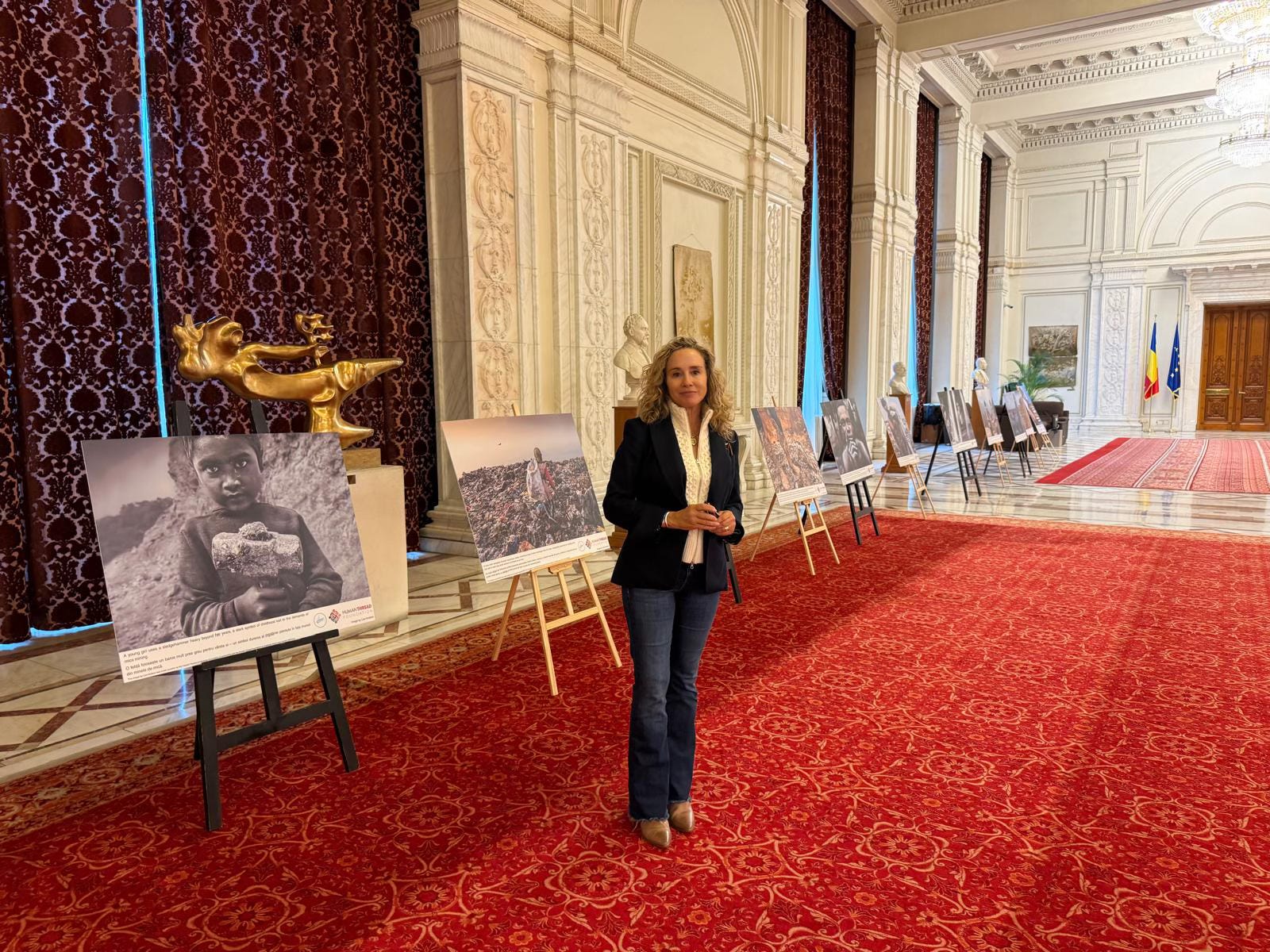
This Saturday, October 18, marks Anti-Trafficking Day in Europe and Anti-Slavery Day in the UK. I’m in Bucharest as the guest of eLiberare, an inspiring social movement that combats human trafficking and sexual exploitation in Romania. The group invited me to exhibit my photographs documenting the harsh realities of human trafficking and to participate in a parliamentary roundtable. Our mission was to come up with solutions to an urgent and horrifying problem, which many people don’t even see: modern day slavery.
Human trafficking is one of the world’s fastest growing crimes. The United Nations reported that between 2019 and 2022, detection of victims globally increased by 25%. The European Union (EU) records thousands of victims of human trafficking each year—a number that dramatically underestimates the severity of the problem.
For each survivor, there are countless more whose stories go untold, their cases undocumented, and their abusers unchecked and unpunished. Romania itself is a major source, transit hub and destination for trafficked persons—with the charity Justice & Care reporting that about 50% of them are children.
Human trafficking is a highly lucrative business. The International Labour Organisation estimates traffickers earn an estimated $236 billion annually. Because the illicit trade so often goes unchecked, it’s become a preferred business among criminals. In Europe, 55 of the most dangerous criminal networks profit off of this despicable trade in human lives. Through my work, I seek to bring modern day slavery to light.
Following the parliamentary event where I gave a keynote address and shared my photographs, I spent time making new images of survivors and visited prisons too, where I met people convicted of human trafficking. There is no excuse for their crimes, but we must hear their stories too. How will we solve this problem if we don’t fully understand it? Still, it was difficult looking these people in the eye, knowing they traded in human lives, abusing and exploiting people, sometimes from their own communities.
We often think of human trafficking as something that happens to other people. But in Europe, 37% of victims are EU citizens. These are people living among us who fall prey to sexual exploitation, labor exploitation or forced criminality. It’s happening all around us, but too often we fail to see it.
I’m grateful for my time in Romania. And for the people I met. (I will be writing more about my time here, and sharing photographs in upcoming editions of Shine a Light.) Anti-trafficking and anti-slavery days are about more than conversations and waking people to the brutal realities of modern day slavery. They are about creating connections that lead to meaningful change.
A single conversation can have a profound effect. It can fund charities like eLiberare to train police, teachers and social workers to detect the signs of human trafficking. It can force a business to be more accountable and transparent about human rights abuses. Or lead police and activists to raid a brothel or a cyber compound and free hundreds of people—some of whom go on to become activists themselves. Ultimately, these conversations and connections can bring justice to survivors.
Last, I want to say that anti-slavery and anti-trafficking days shouldn’t be confined to a single day a year. We should be mindful of this moral outrage every day.
Congratulations - an honor well deserved. And Thank You for your dedication and hard work that it takes to manifest this. You are a powerful change maker and the world needs you!