Modern Day Slavery is Everywhere
Raising Awareness

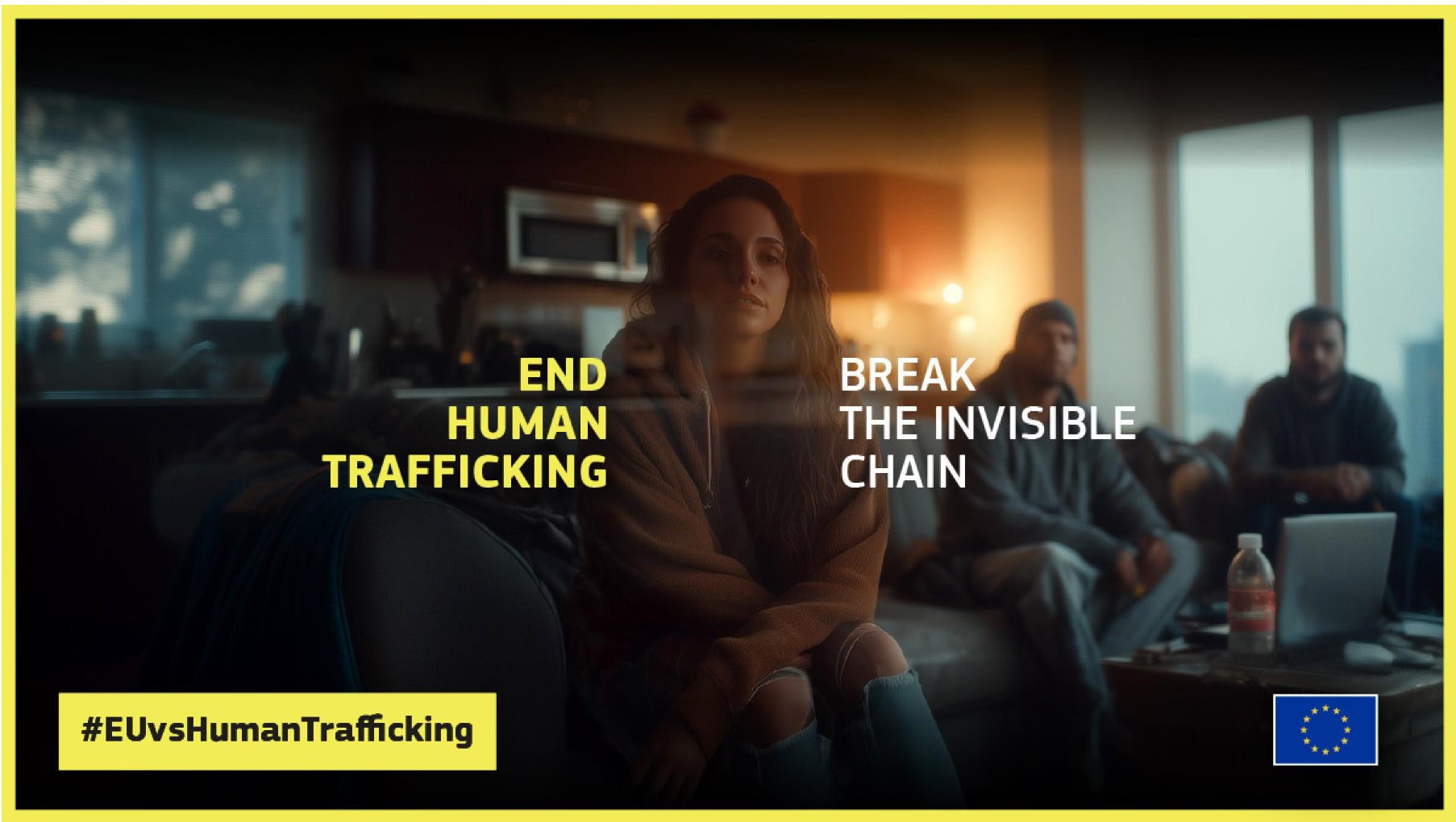
The European Commission is running an EU-wide anti-trafficking campaign called “End Human Trafficking. Break the Invisible Chain”. The goal is to dramatically increase public awareness about forced labor and to help people recognize the signs of trafficking and safely report the exploitation they see.
Campaigns like these matter. Modern day slavery thrives because it is often invisible. This atrocity isn’t just taking place in remote pockets of the world or at the margins of society but is literally all around us.
It’s happening to women and girls in our neighborhoods who have been forced into marriage or domestic servitude. And to men and women in towns and cities in forced labor in nail salons and elderly care homes, and in construction, at factories, and hotels, and at fast food restaurants.
A report out this week says that modern slavery in Britain has reached record levels and is expected to worsen this decade because of increasing global instability and conflict, severe poverty, growing displacement and migration, and as more and more traffickers turn to technological tools like cryptocurrencies and AI, allowing them to scale operations faster than governments can respond.
Across the European Union, some 10,000 people are formally identified as trafficking victims each year, although it’s widely recognized by officials that the real number of people affected is much higher, as so many of the victims go unseen.
The campaign shared a list of signs of human trafficking to look out for, which I thought would be good to post here:
Is the person escorted whenever he/she goes to and return from either work or other outdoor activities?
Can the person speak freely or is someone else communicating for them?
Does the person appear disconnected from family, community, or friends?
Does the person have very few clothing items?
Does the person sleep where he/she works?
Does the person depend on someone else (their employer) for accommodation and transportation? Does the person have freedom of movement?
Does the person live in unsuitable, substandard and overcrowded places, e.g., in derelict or industrial buildings?
Is the person giving his/her earnings to someone else?
If it concerns a child: does the child look intimidated and behave in ways that do not correspond with children of that age?
Is the person in possession of their own identification and travel documents?