Disposable Lives
The Human Cost of Cheap Plastics

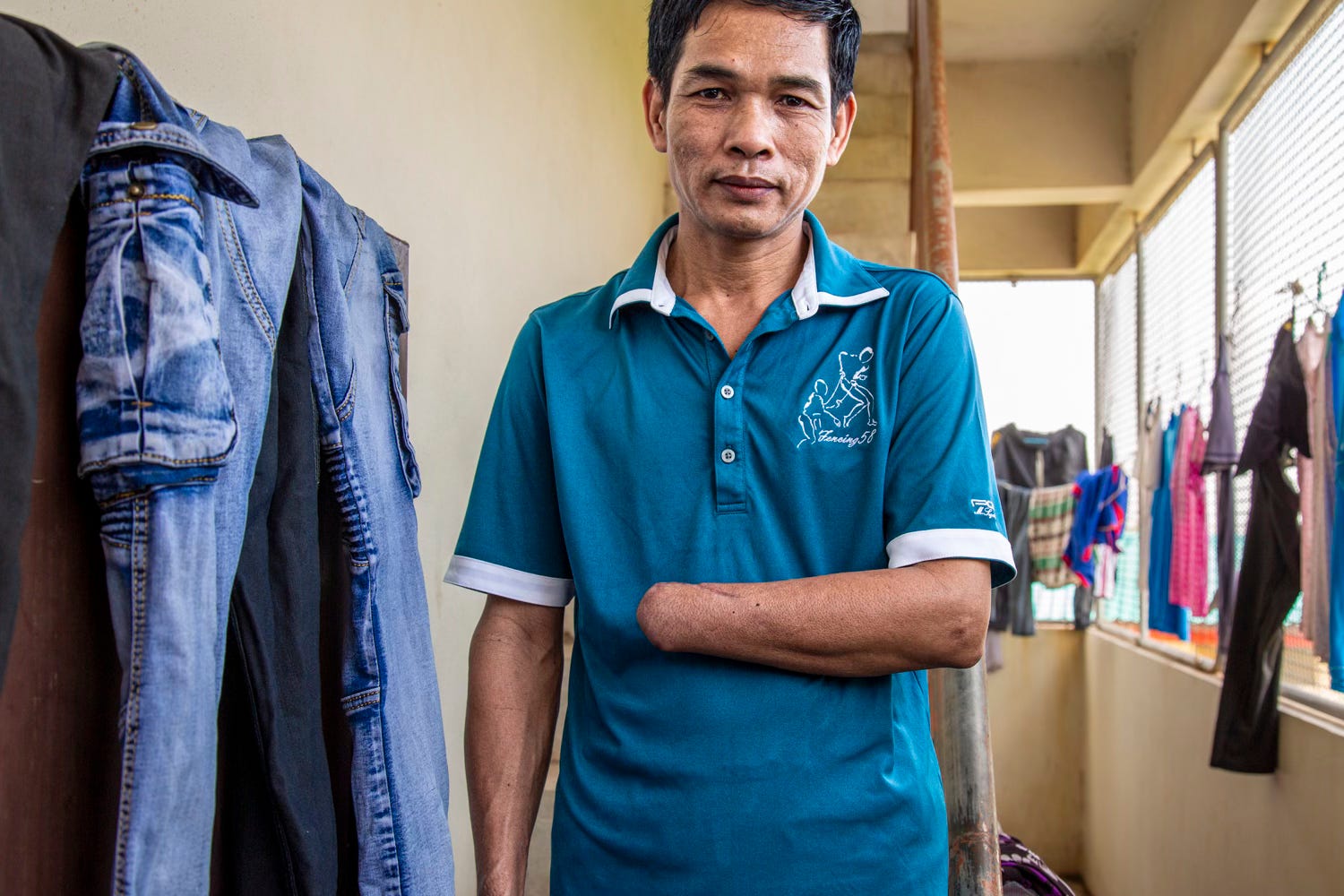
While in Thailand, I spent time with and made photographs of two migrant workers, each of them severely maimed while working on machines that churn out plastic. Taluay was from Laos; Penuy was from Malaysia. Like millions of migrant workers, they had migrated to a foreign land to support their families.
Not long after arriving in Thailand, Taluay lost his hand in a totally preventable horrific accident. He had climbed inside a machine that processed plastics to clean it. The machine was switched off. But then someone switched it back on while he was still inside. The loud thumping and clanking of machinery on the factory floor drowned out Taluay’s screams. By the time anyone heard him, his hand was gone.
Penuy’s injury happened in much the same way, i.e., in a totally preventable accident resulting from sloppy protocols. A family member of his employer instructed him to run plastic through a grinding machine—a task he had little experience doing. The machine lacked a basic safety guard to prevent this accident from happening. As Penuy fed material into the machine, the grinder sucked his hand into its jaws and grinded that too. A coworker yelled for help as Penuy yanked himself free, and was eventually taken to a hospital.
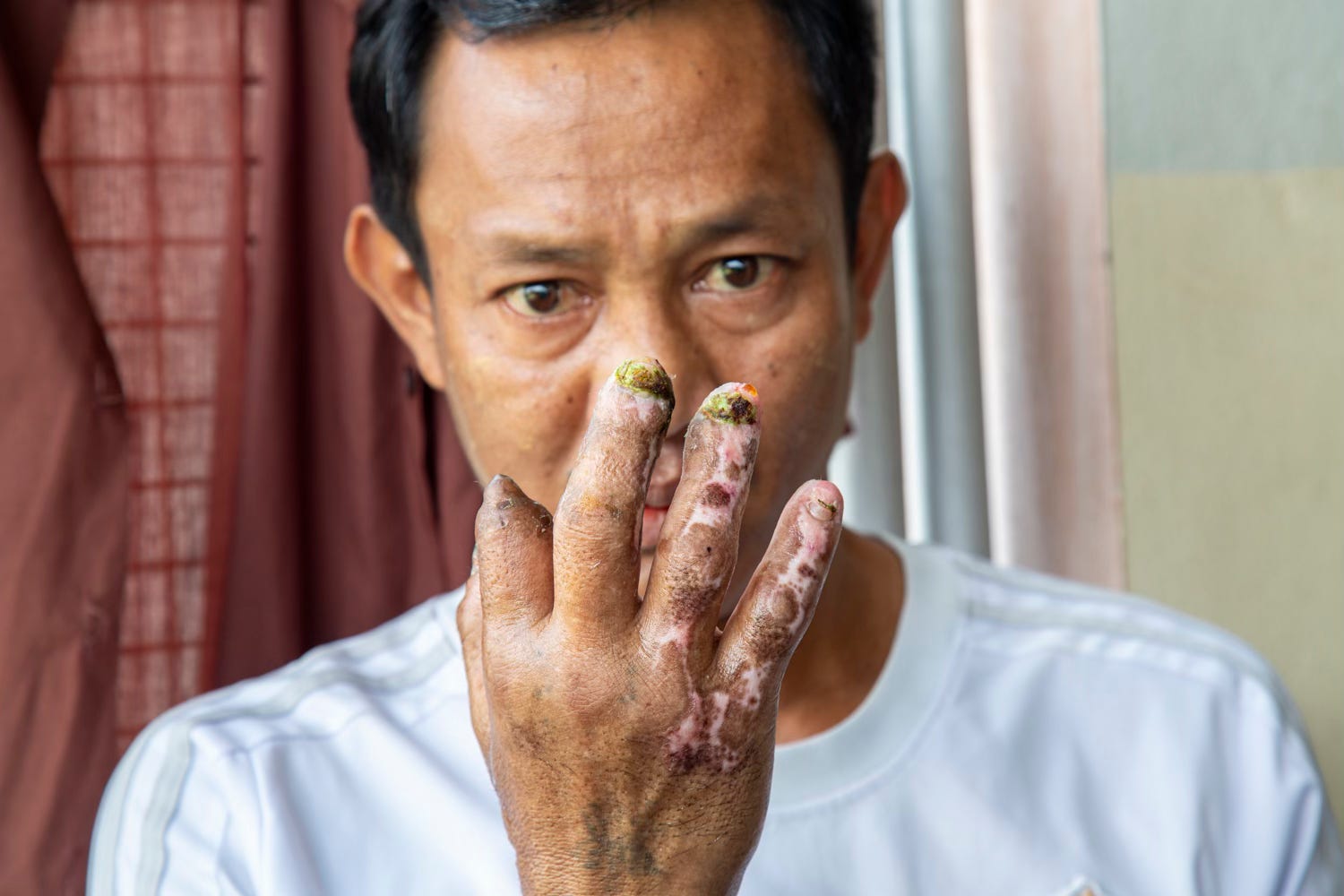
While the exact details may differ, these stories have a lot in common. Two migrant men suffering life-altering, but totally preventable injuries while working to help families back home survive.
In both cases, their bosses covered the initial hospital bills, but then failed to compensate them for their injuries, or cover ongoing medical expenses or provide rehabilitation. Both men were invited to return to work but their injuries prevented them from performing their assigned tasks.
When I made photographs of these men, I was struck by how casually they spoke about their injuries as if what had happened to them was totally routine—expected even. Neither man seemed angry, nor surprised. Penuy said he was aware of at least four other workers who had been injured at the same factory.
I find this so distressing. Imagine, you go to work, day after day, knowing you could lose a limb and really, your ability to work and earn money, and all the while knowing your family’s survival depends on you. This is the reality many migrant workers face.
What also strikes me about this story is that while we read headlines about major industrial disasters—the collapse of a factory, say—we rarely see much about migrant workers losing limbs or even their lives.
The government doesn’t publish comprehensive data on accidents involving migrant workers, but labor-rights organizations and migrant advocacy groups in Thailand have documented numerous cases of migrant workers suffering permanent disabilities like lost limbs. Their data show a particularly high risk of incidents involving migrants in manufacturing construction, agriculture, and fishing.
Complicating matters further, many injured migrants don’t seek medical treatment, much less demand government compensation, even though they are legally entitled to the same injury and disability coverage as Thai citizens. Often they don’t register with authorities or pursue claims over fear of deportation or employer retaliation.
I should say here that the Thai government has taken positive steps towards improving the situation for migrants. These include creating pathways for legal employment, increasing access to healthcare for documented migrants, and strengthening measures against human trafficking and labor exploitation such as by adding more workplace inspections, particularly in high-risk industries, and increasing penalties for trafficking. But many challenges remain.
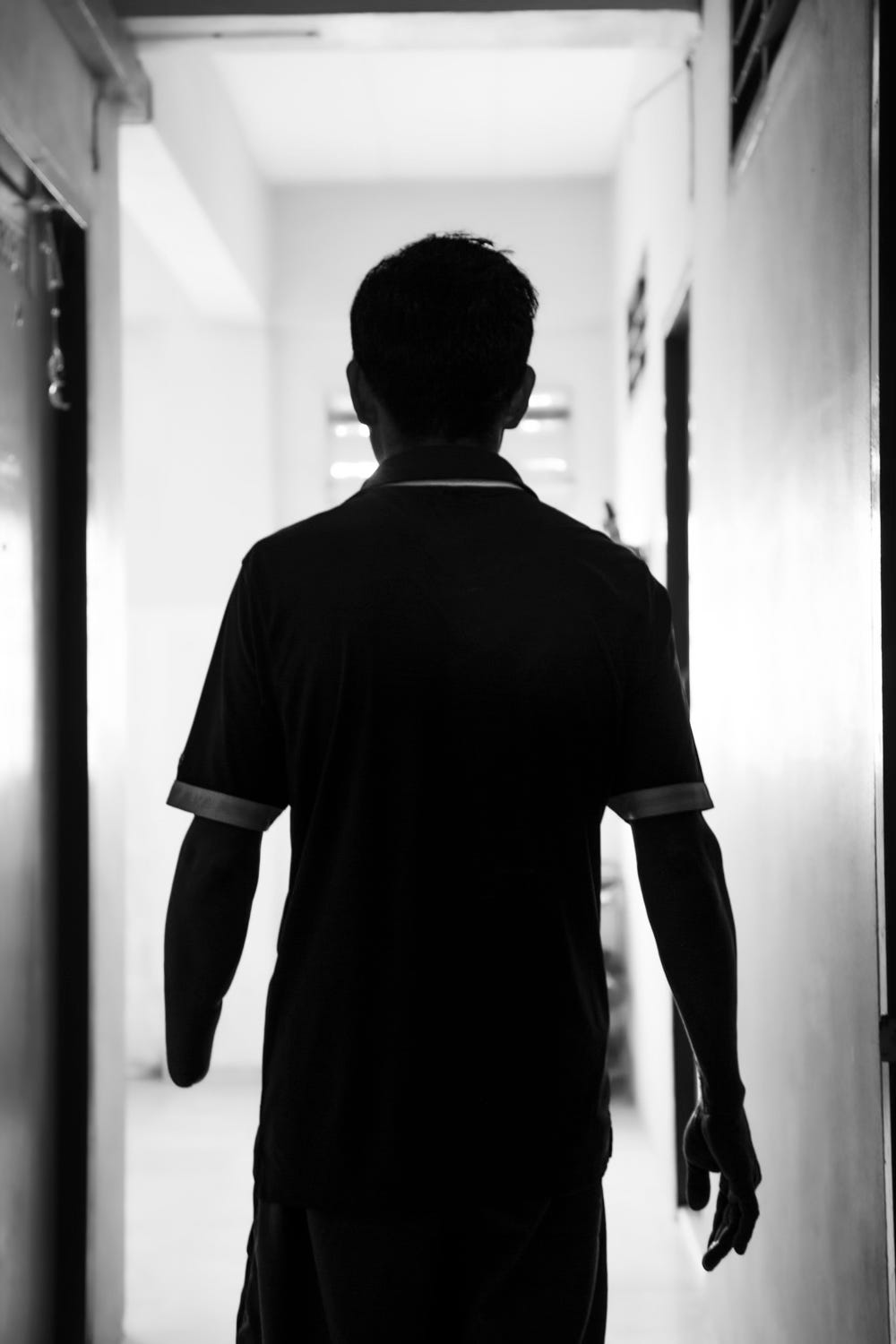
As I photographed these men, I couldn’t stop thinking about how precarious their lives are, and how they were irrevocably altered in just an instant.
Taluay told me he still feels pain and phantom sensations in a hand he no longer has. Both men said they worried about how they would earn a living and what would become of their families.
I am thankful to these men for bravely sharing their stories, for allowing me to make photographs and to bear witness. Their stories really makes you think. How can we as a society continue to prize cheap disposable plastics and low-cost consumer goods at the expense of actual people’s lives. It’s as if we think these people are disposable too.